The Chosen One trope: What is it, how did it get so common in epic fantasy, and why’s it so divisive?
Image credit Unsplash
You are the Chosen One. Feels good, doesn’t it? That sense of … dare I say, destiny. Technically, I should say you are the Chosen Ones as I hope multiple people wind up reading this blog. But fate doesn’t give out participation awards. Plus, the Chosen One trope is all about individualism … isn’t it?
Well, that’s the sort of question I’m asking in this blog. What is the Chosen One trope, why’s it such a big part of epic fantasy canon, and how’s it come to be so divisive?
What is the Chosen One trope?
Every fantasy fiction reader knows the scene: an ordinary individual, often an orphan, discovers a unique power or prophetic destiny that makes them the only person able to save their world from encroaching darkness. That’s the Chosen One trope in a nutshell.
Hold on to that definition. It’s trite, but important. Everything else that seems central to this narrative framework is secondary. You’ll see why I caveat this when we start talking specific protagonists who embody the trope.
Common characteristics of a Chosen One story
Destiny or Prophecy: Our hero’s path is, at least partially, predetermined, often outlined in ancient lore or by a higher power (gods, magic, or elders). Their role, thus, feels inevitable.
Unique Abilities or Lineage: The Chosen One often possesses special gifts, unique magical powers, or a specific legendary bloodline separating them from society.
The "Only One" Factor: Nobody else can fulfill this specific purpose. The narrative pivots on that idea.
Relatable Origins: Our Chosen One is often an “Everyman” type character. They come from humble or unexpected beginnings before discovering, often reluctantly, their destiny. Is there anything more relatable than Frodo Baggins simply wanting to enjoy a few schooners in The Green Dragon?
Reluctant Heroism: Resisting fate, grumbling about their burden, being unprepared to shoulder the world’s responsibilities … the Chosen One rarely hops to action without griping first. The Matrix is my personal favourite example of this.
A "Mark" of Destiny: They often have an identifier; a physical mark, scar, or item (e.g. a magic sword) that indicates they are the true saviour. Think Aang’s glowing tattoos from Avatar: The Last Airbender.
Mentor Figure: The protagonist is usually guided by an experienced mentor who explains their destiny and helps train them to unlock their potential. RIP Obi Wan Kenobi.

Coolest statue in the world. Image credit Unsplash.
Iconic Chosen One examples
The Chosen One trope is a staple of epic fantasy, but it’s not limited to that purview. We’ve already mentioned examples from Sci-Fi, Space Opera, Children’s Animation. And it doesn’t stop there. Prophetic heroes span back before written record. Achilles of Ancient Greece is probably the best-known hero of the oral tradition, but the narrative is transnational; just look at Momotarō of Japanese folklore, a Chosen One born from a peach. Over in the UK, the heroic narrative was popularised most notably by Arthurian Legend. Merlin, Arthur, swords in stones, swords in lakes … ladies in lakes.
Here’s a few more modern Chosen One examples:
Lyra Belacqua of His Dark Materials
Fitz-Chivalry Farseer of The Realm of the Elderlings
Anakin Skywalker of Star Wars
Zhu Chongba of She Who Became the Sun
Why is the Chosen One trope so common?
First, let’s look at the roots of the trope, because the Chosen One concept didn’t originate with epic fantasy. The genre merely proved incredibly fertile ground for the trope to flourish.
While it’s tempting to go into chapter on verse on the historical and mythical roots, legendary figures whose lives were defined by prophetic mandates are a dime a dozen — not merely in Western literature, either. We could talk Moses to Mononoke, but that wouldn’t really explain the trope’s popularity.

Image credit Unsplash
A simple, and again, decidedly trite explanation, is that the Chosen One trope is so popular because it’s so damn effective. Here’s why:
Narrative scaffold: It offers a recognisable pathway through complex worldbuilding, grounding the reader in a recognisable hero’s journey. As an ADHD reader and writer, I think this level of, often subconscious, pattern recognition is among the top reasons why this trope has stood the test of time — and why it’s so open to reinvention. More on that later.
Validation: The Chosen One trope taps into the human need to feel important, transforming ordinary individuals into, or revealing them to be, people with extraordinary potential.
High stakes: It’s a cheat code for high stakes. If the main character fails, the whole world is doomed. What could be more readily compelling than that?
Having said that, the Chosen One trope is also open to some very, very obvious pitfalls.
Overfamiliarity: That same narrative scaffolding that gives you an easy pathway through the story? It can get tired with over-use. One-too-many farm boys, one-too-many birthmarks. The Chosen One trope can lend itself to a touch of laziness.
Lack of earned success: How are you supposed to root for a character that didn’t fight for what they’ve got? If the MC receives everything by divine mandate, they can start to feel very heavily armoured by the plot.
Reduced agency: If the Chosen One is propelled by destiny, their personal choices often feel secondary, or even irrelevant. Predetermination is a tricky path to tread.
I don’t think any of the Chosen One pros automatically make a narrative that uses the trope effective, and vice versa. As with any writing rule, tool, or trick, it is all about the execution. And that’s why I think the Chosen One trope is truly timeless. It lends itself to endless reinvention, and with the epic fantasy genre undergoing an uncontrolled sub-genre bloom, we’re constantly seeing new and imaginative takes on that most ancient of ideas.
Using the Chosen One trope and unsure how to keep it fresh? Subscribe to my newsletter for my free insights. I love chatting this stuff.
Dark fantasy and the divisiveness of fate
Alright, the Chosen One trope is popular. We all know that. But it is divisive. Critics dismiss it as hackneyed and tired; a “literary crutch” as one comment on r/Fantasy recently put it. Yet, again, it’s all about execution.
The Rise of the Anti-Hero and Dark Fantasy
Dark fantasy and grimdark epics have gained enormous traction in recent years. Check out my exploration of the top five fantasy books for adults to see for yourself the popularity of George R.R. Martin and Joe Abercrombie. I didn’t get to discuss it in that blog, but narrowly avoiding a top five finish was Steven Erikson’s Malazan Universe, where protagonists often commit awful acts in the name of survival, challenging the heroic label.
These subgenres often feature an anti-hero who rejects their destiny or is corrupted by the very power meant to save the world.
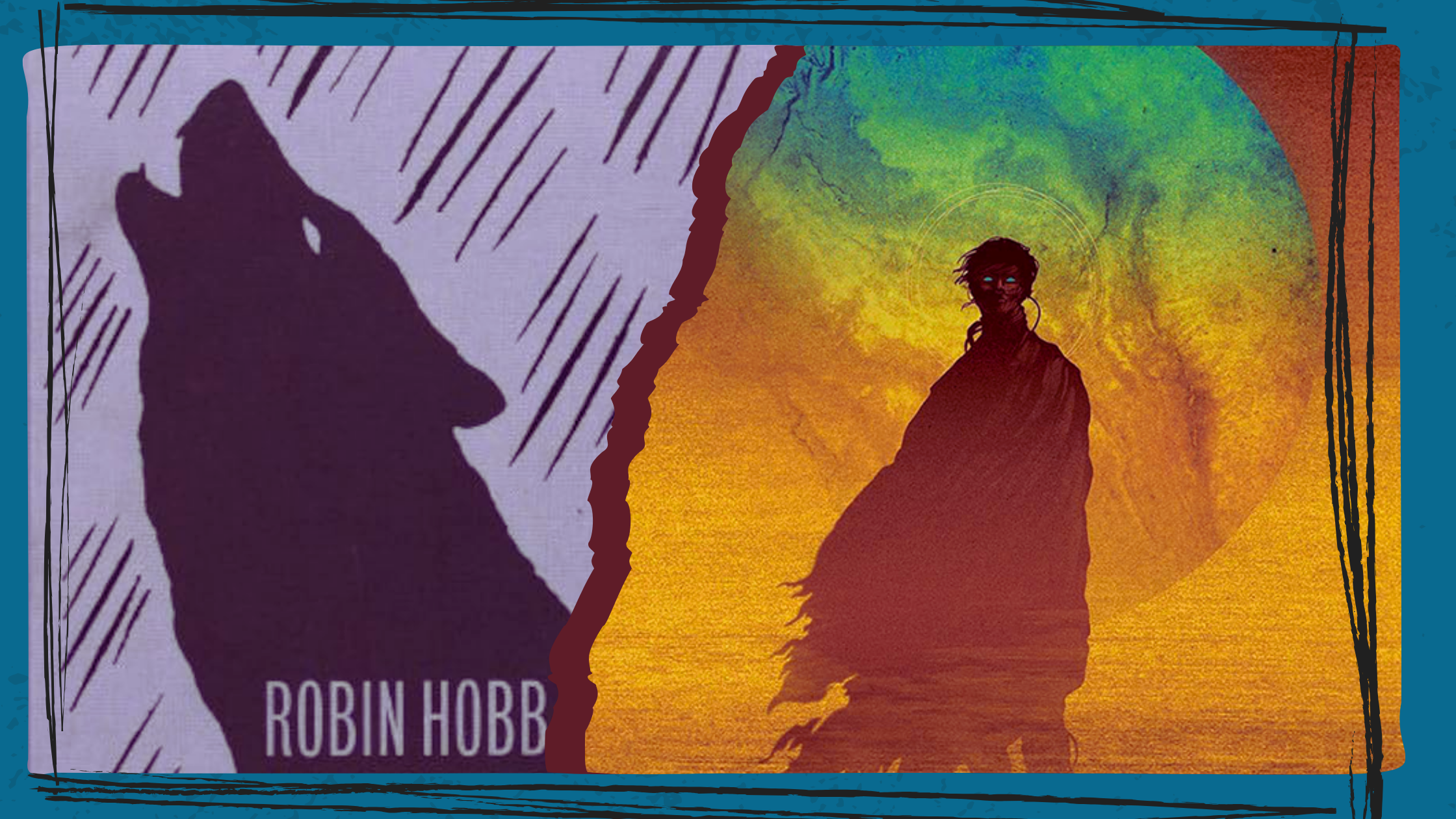
Now, a lot of people do the Chosen One trope well. But, in my personal opinion, there is a right and a wrong answer to the question who does it best. Anyone who read my comp books blog will know how much I love Fitz, the saddest boy in epic fantasy, but Dune is the story that doesn’t just use the Chosen One trope; it redefines it. Here’s how:
Paul is a manufactured Messiah, not a destined one. The Bene Gesserit systematically seeded messianic mythology across Arrakis centuries before Paul arrived, deliberately engineering a cultural prophecy they could exploit. Paul fits the “prophecy” not because fate ordained it, but because his mother Jessica gamed a long-running eugenics and propaganda program. The legend was a tool, not a truth. That’s something I was keen to explore in The Fortune-Teller’s Son.
Paul himself knows it's a lie, and uses it anyway. Unlike most Chosen One heroes who embrace their destiny with sincerity, Paul consciously weaponizes the Fremen mythology for political and military power. He’s lucid about the manipulation, which makes him more cynical conqueror than innocent hero.
His prescience is a trap, not a gift. Paul’s visions don’t liberate him, they lock him into an increasingly narrow corridor of possible futures. He can see the paths ahead, but exercising true free will means risking catastrophe. He’s less a hero following his destiny than a prisoner of it.
In short, Herbert used all the furniture of the Chosen One story (prophecy, special bloodline, supernatural gifts, oppressed people, evil empire) and then showed why surrendering to that narrative is seductive, manipulable, and ultimately destructive. Honestly, buy the damn book. Just FYI, the link below is an affiliate link, meaning I get a cut if you buy through here. Transparency and all that.
Subverting the Prophecy
So, what’s my take?
In The Fortune-Teller’s Son, I’m less interested in the mantle of heroism and more concerned with the search for a saviour. The All-Song Saga features warring factions with conflicting ideologies built on prophecy. But foresight is unreliable; open to interpretation. When people get desperate, they may begin to see a saviour where there isn’t one.
Dylan is my MC. He’s a seventeen-year-old orphan (see what I did there) on the streets of Trythe, having spent years hiding his unreliable prophetic powers from those who would use him to control others. When a desperate gamble to save his best friend’s life goes catastrophically wrong, he finds himself at the centre of a tangled prophecy; miscast as the saviour of not one, but two rival factions destined to destroy each other. Now, he must play both sides long enough to forge a future of his own. The alternative is becoming the very weapon he’s spent his life running from.
I’m using the Chosen One trope to explore themes of societal pressure, factional expectations, and the difficulties of navigating impossibly polarised situations.
Transnational perspectives on the Chosen One trope
Before I start signing off, I’m conscious that discussions of the Chosen One trope far too often ignore voices that were excluded from the foundational waves of epic fantasy. I grew up reading fantasy fiction writers like J.R.R. Tolkien, Tad Williams, Terry Brooks, and these were so fundamental to me developing my taste as a fantasy reader and writer. But I recognise the dearth of this background every time I go down to my local bookshop and see a Chosen One narrative inspired by feudal Japan, or 1920s Peru, or modern-day Malaysia.
So, I’d like to spotlight a few novels from my TBR to celebrate that fact:
David Mogo, Godhunter: Suyi Davies Okungbowa’s “Nigerian Godpunk” features a demigod who is an unwilling hero scouring the underbelly of Lagos.
Black Water Sister: Zen Cho’s novel features Jess, an involuntary medium for a vengeful deity in urban Malaysia.
She Who Became the Sun: Shelley Parker-Chan’s queer reimagining of the Ming Dynasty's founding follows Zhu Chongba in the wake of her brother's death in 1345. She steals his identity to claim his fated "greatness" masquerading as a man to rise from a peasant monk to a ruthless rebel leader.
Is There Still Magic in the Mark?
To get a bit lyrical: The Chosen One trope persists because it mirrors universal psychological and emotional truths. Whether it is the classic farm boy of high fantasy or the wizard detective of urban fantasy, these patterns provide cognitive scaffolding that allows us to explore difficult themes of power, responsibility, and transformation.
As long as readers seek both the familiar and the new, the Chosen One will continue to walk the streets of our cities and the landscapes of our secondary worlds, forever fated, and forever debated.
Support the Journey
Join the All-Song. If you enjoy deep dives into the shadows of twisted cities, lyrical prose, and tormented teenage protagonists, sign-up to my newsletter. I’ve been on this road alone for a long time. It’s nice to finally have some company.